
How ICA Shaped South Africa’s Culinary Standard
As restaurants, chefs, patrons and the broader South African culinary industry prepare for the announcement of the 2026 Eat Out Awards, one statistic stands out with quiet authority: more than a quarter of all Western Cape nominations this year are chefs trained at the Institute of Culinary Arts (ICA).
For a school that deliberately remains small, this is no minor achievement. It is a powerful affirmation that world-class culinary standards can be cultivated on home ground – consistently, rigorously and with intention.
In 2026, ICA celebrates 30 years of culinary training excellence. Three decades ago, when its doors first opened in the Stellenbosch Winelands, the South African fine-dining landscape looked very different. Today, the calibre of chefs shaping that landscape tells the story of ICA founder and Principal, Letitia Prinsloo’s vision, discipline and an unwavering belief in excellence.
A Vision Ahead of Its Time
When Letitia made the bold decision to close her award-winning Chaîne des Rôtisseurs restaurant in Pretoria and relocate to Stellenbosch 30 years ago, she did so with a clear purpose: to train South African chefs who could compete at a global standard.
At the time, internationally recognised South African chefs did not exist. The infrastructure, exposure and benchmark for excellence were still emerging. ICA was founded not to follow trends, but to set a standard grounded in classical technique, discipline and a deep understanding of what defines true culinary mastery.
Around that same period, the need for an independent, credible restaurant awards system was being identified within the industry. Lannice Snyman, widely regarded as instrumental in recognising this need, quietly assembled a panel of judges — a process that, for many years, remained confidential. Because of her work with the Chaîne des Rôtisseurs and its Jeunnes (Young) Chefs competitions, Lannice deliberately identified Letitia to serve as one of the early judges, contributing her expertise anonymously for many years, at a time when integrity and independence were paramount.
Judging Excellence at the Highest Level
Letitia’s role as a judge would later extend far beyond South Africa. She was selected to serve on the international judging panel for the S.Pellegrino World’s Best Restaurants Awards, a responsibility that required her to dine anonymously at some of the world’s most revered restaurants. From New York to Milan, from France to England, this work placed her in dining rooms led by chefs whose names define modern gastronomy — Heston Blumenthal, Massimo Bottura, Raymond Blanc, to name but a few — establishments where excellence is not aspirational, but expected.
This was no small feat. Judging at this level demands extraordinary discernment, consistency and credibility. It is one thing to recognise quality; it is another to identify what elevates a restaurant from good to exceptional.
Why Judging Matters
Judging, at its highest level, sharpens perception. It teaches the difference between competence and brilliance, between precision and perfection. It reveals the intangible qualities — restraint, clarity, confidence — that define the world’s most respected chefs.
For Letitia Prinsloo, this experience informed her greatest contribution: education. Because to teach excellence, one must first be able to recognise it.
These insights became the seeds planted in ICA’s curriculum — shaping chefs who understand that awards are not the goal, but a by-product of integrity, consistency and craft. ICA-trained chefs do not chase recognition; they earn it by standing on the shoulders of those who came before them, equipped to operate in the same global realm of excellence.
A Legacy Recognised
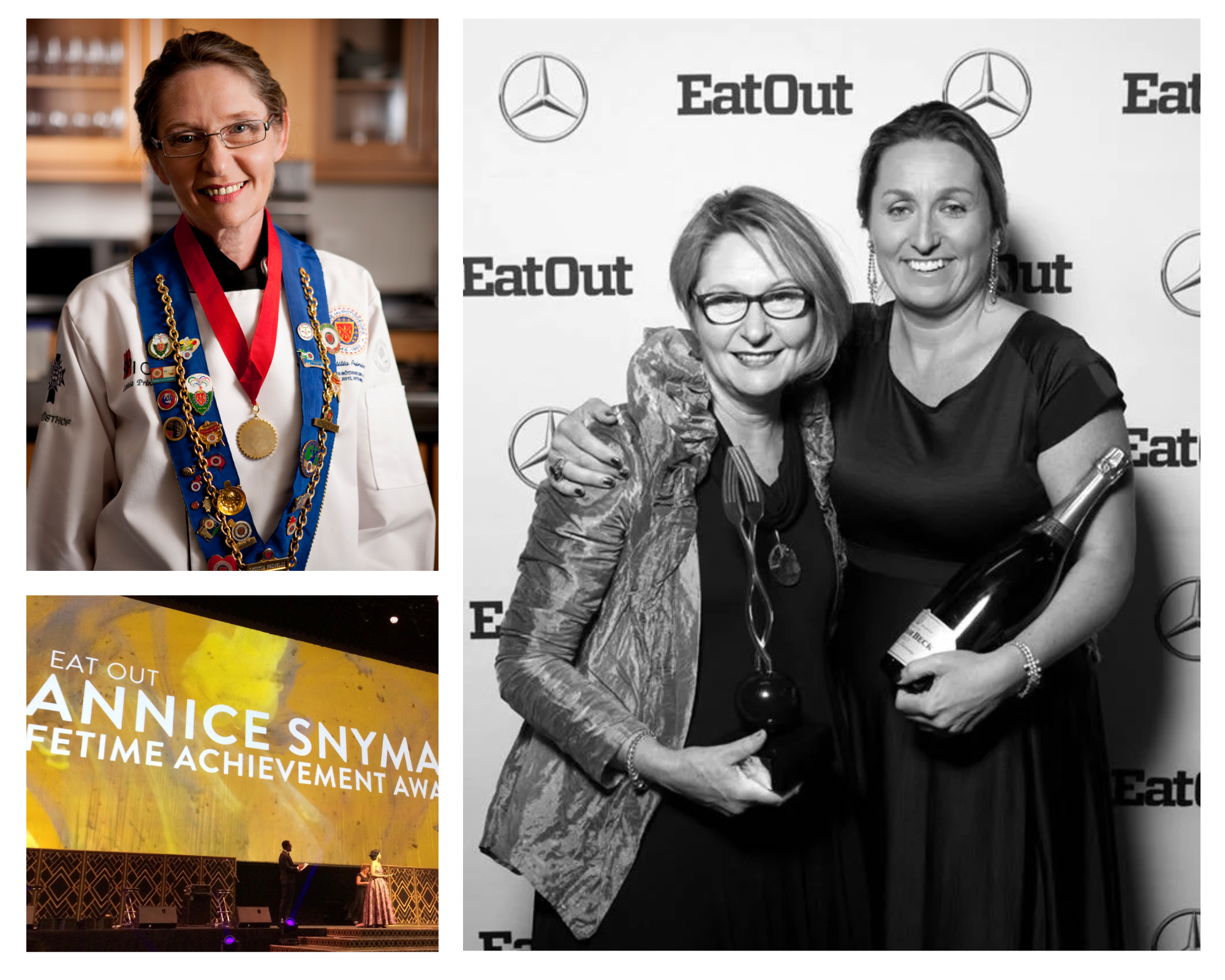
In 2017, Letitia’s contribution to the industry — as both culinary educator and coveted judge — was formally recognised when she received the Eat Out Lannice Snyman Lifetime Achievement Award. To date, ICA remains the only chef school whose founder or principal has received this honour.
That recognition speaks not only to individual achievement, but to the enduring impact of ICA itself — an institution that has shaped South Africa’s culinary identity on a global stage.
In more recent years, as ICA alumni began performing consistently on the international stage and increasingly dominated South Africa’s most respected awards lists, Letitia Prinsloo made a deliberate and principled decision to step back from formal judging roles. This was done to protect the integrity of the judging process itself — ensuring that ICA’s growing success would never raise questions of bias or conflict of interest. It was a quiet but significant gesture, reflecting the same values of responsibility and ethical leadership that have long underpinned ICA’s approach to culinary education.
Today, ICA can step aside with confidence and appreciation, recognising the immense responsibility carried by the new generation of judges tasked with evaluating excellence at the highest level. In awards systems that are not driven by popularity, but by rigour, independence and expertise, judging remains one of the most demanding and vital roles in the industry. As ICA-trained chefs continue to earn recognition through merit, the institution itself honours the judges who uphold these standards — safeguarding the credibility of awards that shape the future of gastronomy.
As the 2026 Eat Out nominations once again reflect the strength of ICA-trained chefs, the message is clear: world-class excellence is not accidental. It is taught, cultivated and upheld over time.
Thirty years on, ICA continues to do exactly that.