YOUR FUTURE IS BIGGER THAN THE KITCHEN
- Beyond
- Blog

Why the Institute of Culinary Arts grows more than chefs
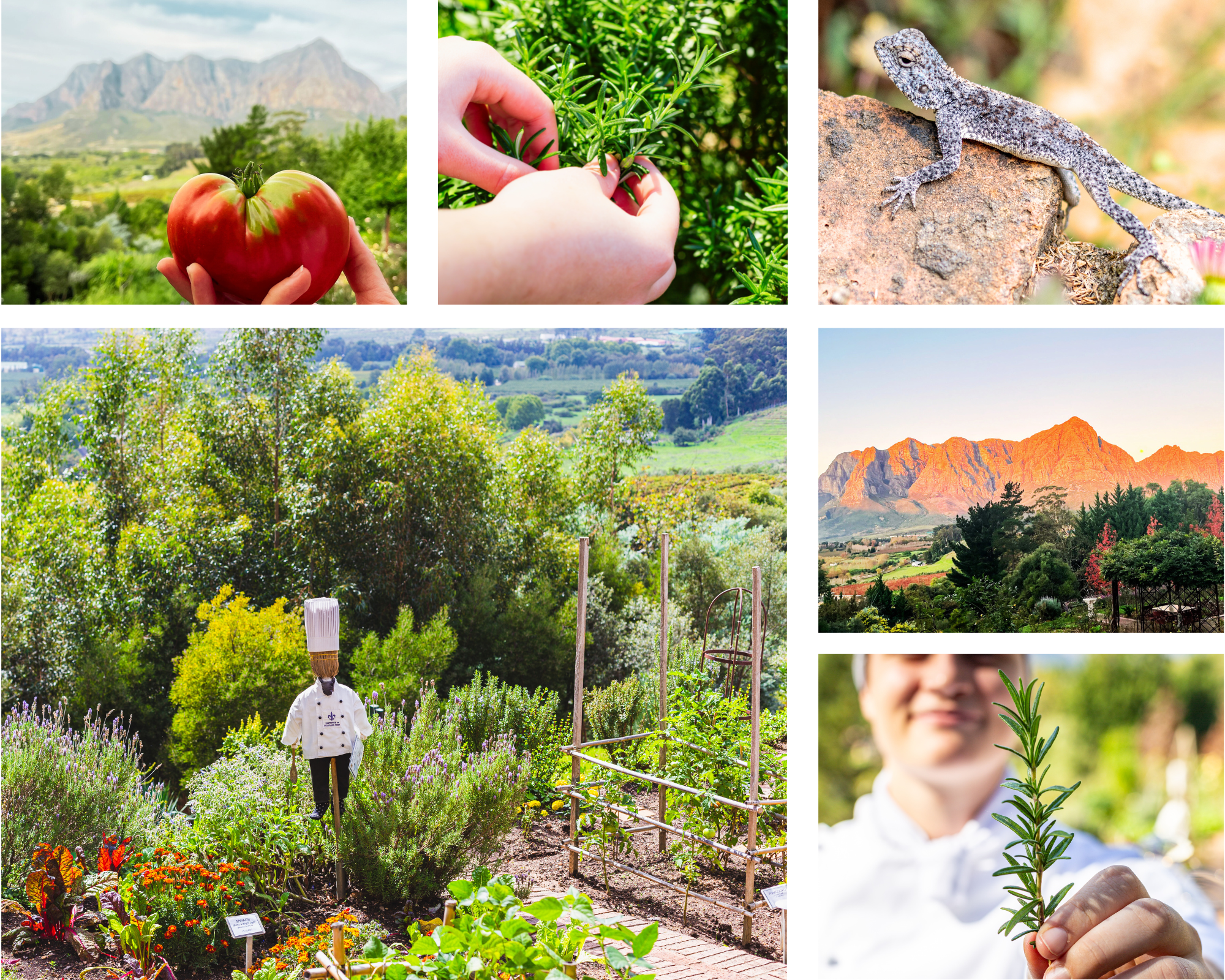
At the Institute of Culinary Arts, sustainability is not a slogan pinned to a noticeboard. It is something you can hear, see, smell and taste — carried on birdsong in the early morning, alive in the soil beneath our students’ chef shoes and present in every dish that begins its journey in the campus garden.
Set away from the density and pace of the city, the ICA campus exists within a natural rhythm that cannot be replicated in urban spaces. Our gardens are not ornamental. They are working ecosystems, cultivated with intention, respect and patience, where herbs, vegetables, fruit trees, insects, birds and microorganisms coexist in quiet cooperation. Pollinators arrive uninvited but welcome. Birds nest, insects thrive, soil regenerates.
The result is abundance that feels earned rather than engineered.
This is biodiversity in action — not curated, not controlled, but allowed to function as nature intended.
Sustainability begins with understanding, not imitation
In the modern cheffing world, sustainability is often discussed in terms of trends: zero-waste menus, hyper-local sourcing, ethical produce. While these ideas matter greatly, ICA believes sustainability begins much earlier, with students’ understanding of systems rather than copying outcomes.
When students pick from the campus gardens, they learn more than where food comes from. They learn how long it takes. They learn what happens when there is drought or flooding or frost. They see how pests are managed without eradication, how balance is restored rather than enforced. They witness firsthand that flavour improves when ecosystems are healthy.
This lived experience gives ICA graduates something increasingly rare in the industry, setting them distinctly apart from their peers: ICA students enter the cheffing world with ecological literacy. When ICA students graduate, they leave understanding that sustainability is not about perfection, but about participation. It’s about working with nature rather than extracting from it.
That mindset is not theoretical. It’s embodied in the work of alumni like Peter Tempelhoff (ICA Class of 1996), whose most recent venture, Arum at Boschendal, champions a philosophy deeply rooted in regenerative farming, local provenance and culinary creativity born from respect for the land. This approach is further reflected in Peter’s work at FYN, recipient of the World’s Best Sustainable Restaurant award in 2023, and most recently selected as one of only four Relais & Châteaux restaurants worldwide to partner with UNESCO on a groundbreaking sustainability pilot. Rooted in the Kogelberg Biosphere Reserve and the Cape Floral Region, FYN’s collaboration explores biodiversity, cultural heritage and regeneration — from cultivating endangered indigenous plants and moving away from wild harvesting, to expressing ancient South African ingredients through refined, technique-led cooking. Guided by paleontologists, the work connects deep history with contemporary culinary craft, reinforcing the belief that great cuisine begins with ecological stewardship and a deep understanding of place.
A garden that teaches chefs how to think
The ICA gardens are not just a resource; they are teachers:
In a culinary industry facing mounting environmental pressure, chefs who understand these principles are not simply employable — they are essential!
This kind of leadership is embodied by other ICA alumni like Kobus van der Merwe (ICA Class of 1999) of Wolfgat, whose celebrated work in the culinary world emphasises locality, respect for soil and sea and a reverence for the ingredients that ecosystems produce. Kobus’s contributions demonstrate how chefs attuned to the complexity of biodiversity can redefine cuisine and community impact. No wonder Wolfgat was named Best Off-Map Destination at the World Restaurants Awards in 2019 and continues to serve bespoke meals that upholds his restaurant’s unique essence of sustainable sourcing.
Another ICA graduate whose work exemplifies sustainability in action is Hylton Espey (ICA Class of 2003), whose leadership in environmentally responsible hospitality at Culture Restaurant in Cornwall, UK, earned international recognition with a Michelin Green Star — an accolade awarded to restaurants at the forefront of sustainable gastronomy. Hylton’s work reflects a deep commitment to responsible sourcing, environmental accountability and long-term thinking in the kitchen, proving that sustainability and excellence are not opposing forces, but mutually reinforcing ones. His journey further illustrates how ICA graduates carry an ingrained respect for biodiverse ecosystems into kitchens that influence global standards.
Diversity is not a challenge, it is a strength
Perhaps the most powerful parallel lies not in the soil, but in the people who walk it.
Just as no single plant dominates the ICA gardens, no single personality, background or learning style defines our students. They arrive with different stories, different strengths, different rhythms — and at ICA, there is space for all of them.
Some students thrive in precision, others in creativity. Some are natural leaders; others are quiet builders.
The culinary world, like nature, does not rely on uniformity. It relies on diversity to remain resilient. This diversity has allowed ICA graduates to find their place across the full culinary spectrum, because at the ICA, we do not try to shape students into identical chefs. We help students find where they belong within the vast culinary landscape — from fine dining to product development, from food media to the intricacies of wine, from leadership to advocacy and entrepreneurial ventures yet to be imagined.
Graduates emerge equipped to contribute meaningfully whether they find themselves in Michelin-star kitchens, transforming farm-to-table narratives, building sustainable enterprises or inspiring communities to see food as culture and conservation.
An education rooted in place, purpose and possibility
What sets the Institute of Culinary Arts apart is not only its location, but its philosophy within this spectacularly beautiful and bio-diversely unique location: that great chefs are cultivated, nurtured and grown. Not manufactured.
They are shaped by environment.
They are influenced by what they are allowed to observe.
They are strengthened by being part of something larger than themselves.
In a world where speed often overshadows substance, ICA chooses depth. When sameness is efficient, ICA celebrates difference. Therefore, in an industry searching for sustainable answers, ICA quietly demonstrates that the solutions have been here all along — rooted in the land, alive in the gardens and reflected in every student who finds their place among them.